Dr. Omnia Hosni Karim
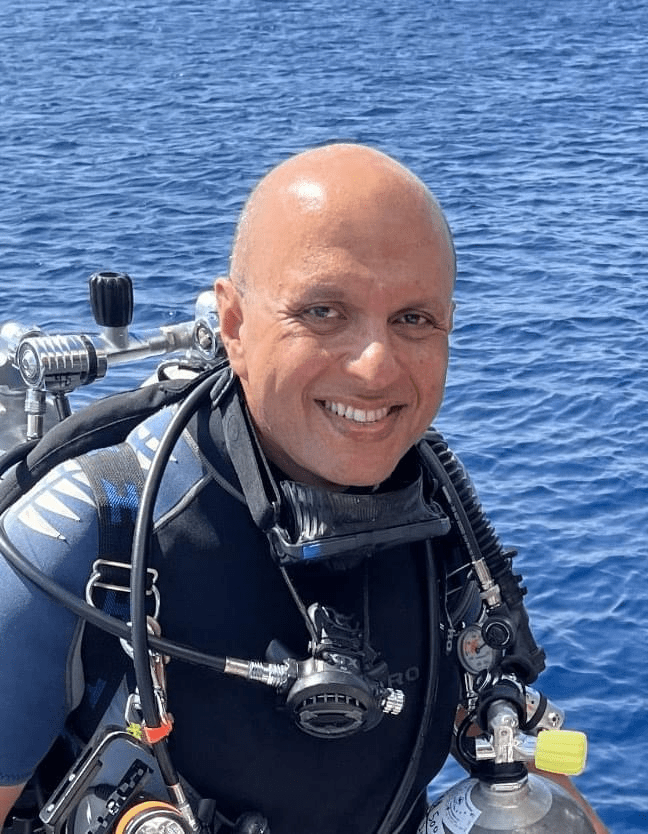
It was hobby, coincidence, and following passion that led him into the fascinating world of underwater archaeology, a field full of opportunities and wonders that reveal the secrets of history and artifacts. From there began a remarkable academic and professional journey. Over time, he transformed from a recreational diver and bank employee into an academic researcher in underwater archaeology with an international reputation, contributing to raising Egypt’s name in the field of submerged maritime heritage.
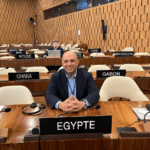
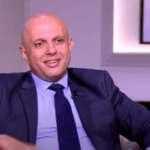
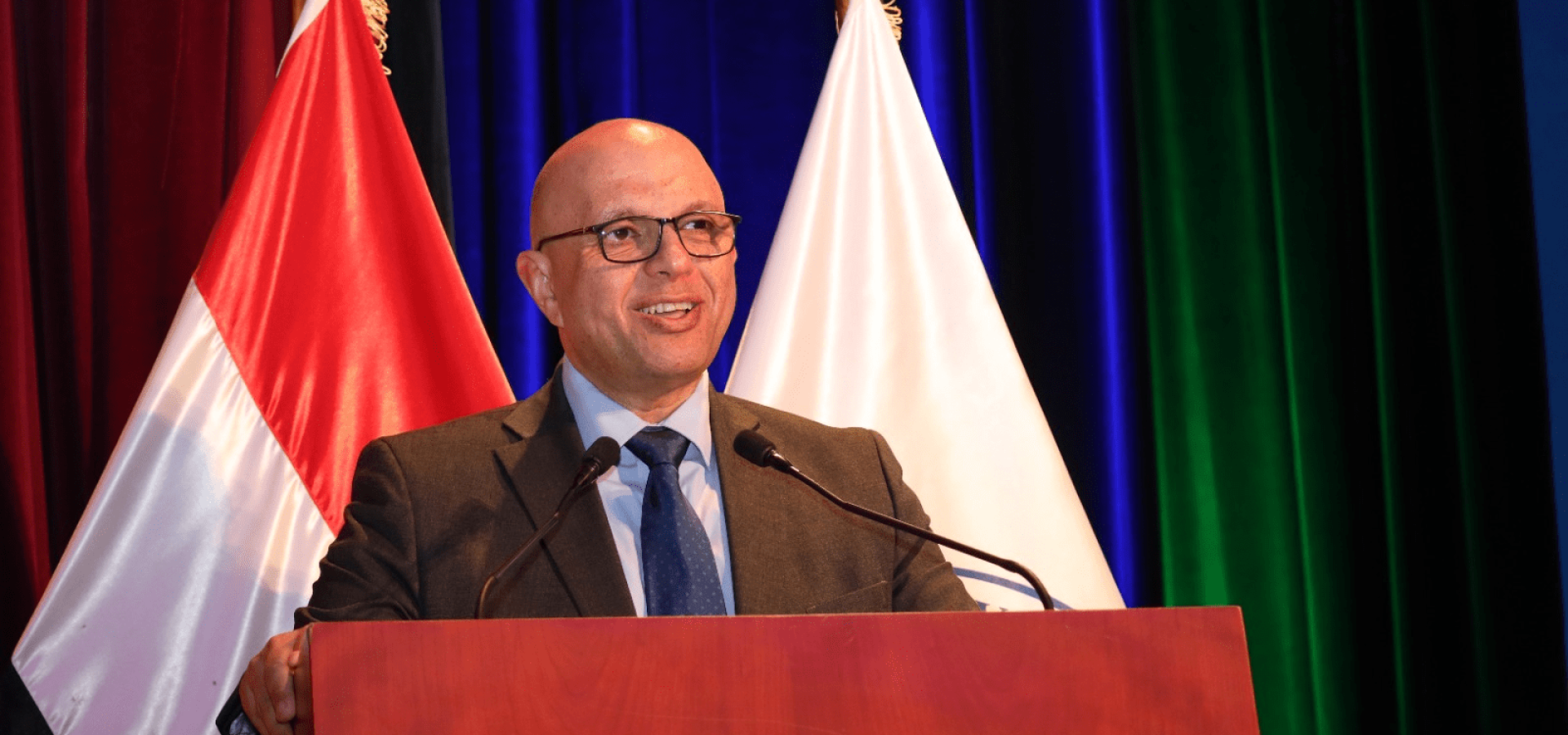
He is Dr. Emad Khalil, Professor of Maritime Archaeology at Alexandria University, who in his interview with Al-Akhbar recounts his success story as the head of the first UNESCO Chair in the Middle East for Underwater Cultural Heritage.
Your success in the field of maritime archaeology—how did it change the course of your life and rebuild it from the beginning?
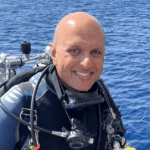
Yes, that is exactly what happened. In my youth, I practiced diving as a hobby, and I never intended to specialize in underwater archaeology. In fact, I didn’t even know such a field existed. I studied at the Faculty of Commerce, Department of Political Science, and during my final academic year I became responsible for the training department at a diving center in the Montaza area of Alexandria in the early 1990s.
I remember that one day a fisherman suddenly came and told us that he had seen wreckage and wooden remains on the seabed in the Maamoura area. My colleagues and I at the center, along with Captain Mohsen Gohary, went to explore the site and discovered that it was a sunken ship.
At the time, I drew a sketch map of the site and its contents, without any formal study—it was simply meant as a guide—and I submitted it to the authorities such as security services and the Ministry of Antiquities. That was the first shipwreck I helped discover.
Afterward, I went to the Faculty of Arts to search for the story behind the ship and asked several professors, but I couldn’t find a clear answer. Later it turned out to be a Roman ship from the third century, coming from Greece and carrying amphorae filled with wine.
Time passed, and after graduating from the Faculty of Commerce I worked in banking, where I stayed for about two years. One day I decided to attend a lecture at the American Cultural Center presented by the founders of the Institute of Nautical Archaeology in Texas about maritime archaeology. This institute, established in the 1970s, was the first of its kind and its founders were trying to open a branch in Egypt.
This new field fascinated me. I spoke with the founders, and they offered me a job. I didn’t hesitate to change my career path, so I resigned from the bank and worked with them from the mid-1990s until 2001.
So we can say coincidence led you to change your world—from hobby to professional specialization in a precise new field?
Exactly. I learned a great deal from the American institute and eventually became Deputy Director of the mission for eight years.
During that time I discovered the “Sadana” shipwreck in the Red Sea, dating back to the 18th century. We conducted several excavations there that continued for years until 1998. It was considered the first excavation in Egypt on a sunken ship, and we plan to return there soon to continue the work.
I decided to deepen my new passion through study. I returned as a student and joined the Department of Archaeology at the Faculty of Arts for four years. I graduated top of my class, which allowed me to be appointed as a teaching assistant. Then in 2001 I traveled to England, where I obtained my Master’s and PhD degrees in Maritime Archaeology from the University of Southampton in 2005, and later became a professor at Alexandria University.
Let’s move from the past to the present. Your latest achievement is leading the first UNESCO Chair in the Middle East for underwater cultural heritage. How did Egypt achieve this success?
Work on this idea began in March 2020, and I was responsible for writing the project proposal. It was submitted through the National Commission for UNESCO in Cairo, which is affiliated with the Ministry of Higher Education.
UNESCO reviewed the proposal and approved it through Egypt’s Permanent Delegate to UNESCO. It was a collective effort, and many people played important roles. I would especially like to thank Dr. Essam El-Kurdy, former president of Alexandria University; Dr. Ghada Abdel-Bary, head of the National Commission for UNESCO; as well as Ambassador Ehab Badawy and Counselor Amr Abdullah, who handled the UNESCO file.
How long does the UNESCO Chair agreement last?
The agreement lasts four years and can be renewed depending on the achievements during that period. Each year we submit a report on our activities.
The UNESCO Chair in Alexandria is the second in the world specializing in maritime archaeology—the only other one is in France. With this addition, Egypt now has four UNESCO Chairs, three of which are in other fields at Cairo University, Ain Shams University, and Nile University.
What projects do you plan to achieve through the UNESCO Chair?
Egypt is considered a center of expertise in underwater archaeology in the Arab region, so it has an important role in spreading knowledge and awareness, especially since interest in this field in the Arab world is still limited.
No other Arab university besides Alexandria University currently offers a specialization in maritime archaeology. Some Arab countries also lack training programs for specialists. Therefore, our main goal is to cooperate with the UNESCO Regional Office in Cairo to create training and awareness programs for Arab countries, and to provide scientific and technical consultation to institutions concerned with underwater cultural heritage.
This includes research, documentation, conservation, and public presentation, as well as working to include this specialization within university curricula across the region.
From your academic and practical experience, how do you evaluate the condition of underwater heritage in Egypt? And how can it be developed and used globally and for tourism?
I believe there are two main challenges.
The first is that most marine archaeological work is concentrated in Alexandria, with only limited activity elsewhere, usually in the Red Sea. As a result, international attention, publications, and documentaries focus mainly on Alexandria while ignoring other sites.
Therefore, we need to expand archaeological work beyond Alexandria to uncover the rest of Egypt’s rich maritime history.
And what is the second challenge?
The absence of a specialized museum for maritime heritage. This is quite unusual for a country like Egypt, which was among the first civilizations to build boats and ships, sail the Nile, and navigate the Red Sea.
I am not referring simply to a museum that displays artifacts recovered from underwater. Once removed from their environment, these objects lose part of their connection to the sea and part of their value.
UNESCO’s approach—and that of countries that signed its convention, including Egypt—is to keep underwater heritage in its original location unless there is a clear necessity, such as risk of theft or damage, or if proper conservation and display can be guaranteed.
Simply recovering artifacts and storing them in warehouses is not acceptable.
But there were proposals for underwater tunnels and museums to display submerged artifacts in Alexandria?
All the talk about underwater tunnels and submerged museums has become outdated and impractical.
Globally, there are several ways to present underwater heritage:
- Direct viewing through diving, though this is not accessible to everyone.
- Land-based exhibitions using modern technology, such as virtual reality, holograms, videos, 360-degree images, and replicas of ships, boats, and cargo displayed within a coherent museum narrative.
For example, the large open spaces of the Citadel of Qaitbay in Alexandria could have been used for such exhibitions instead of being turned into offices.
Therefore, I reiterate my call for establishing a specialized museum that presents a comprehensive history of Egypt’s maritime heritage—something that requires cooperation between official and research institutions.