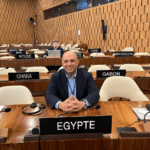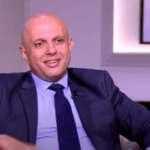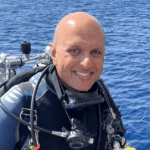
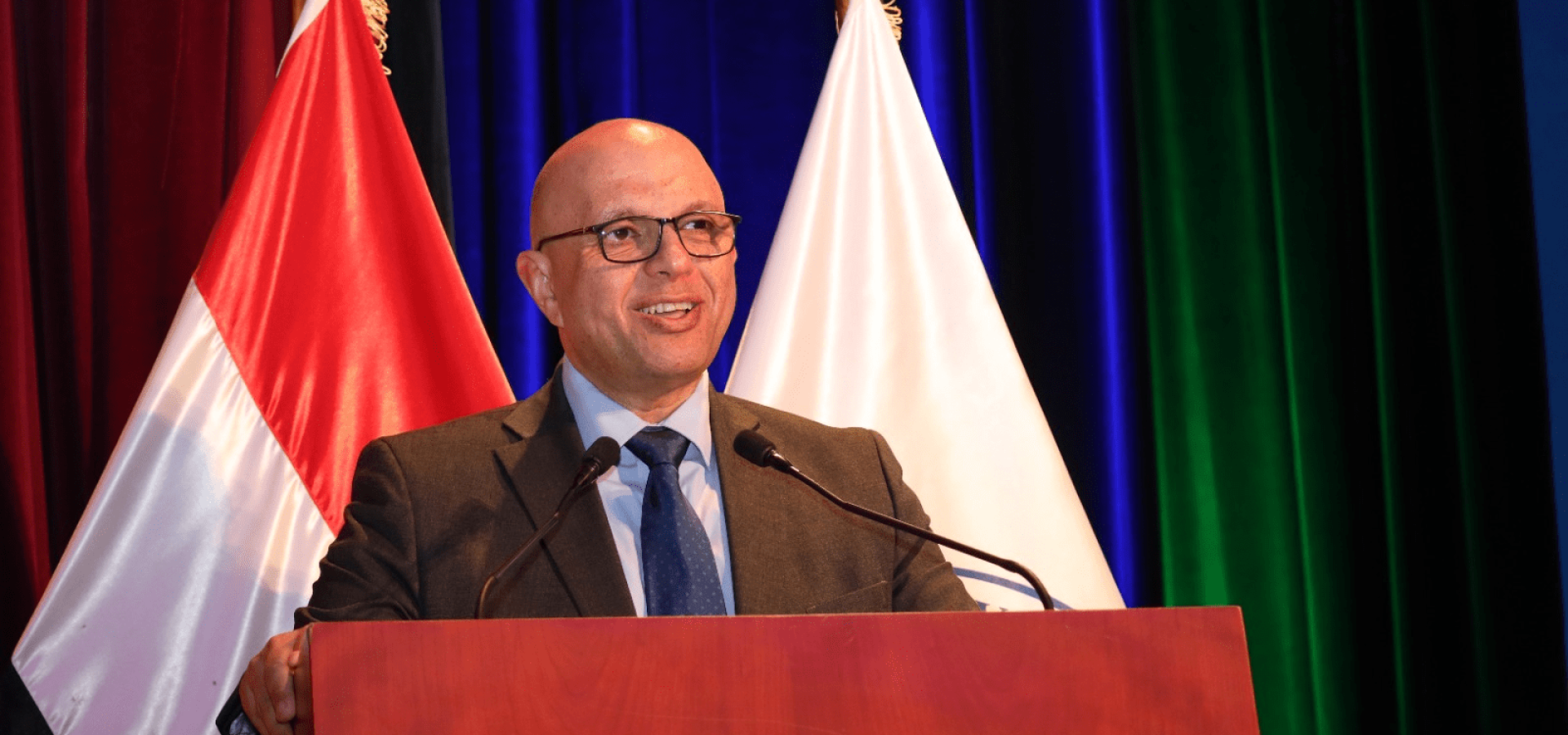
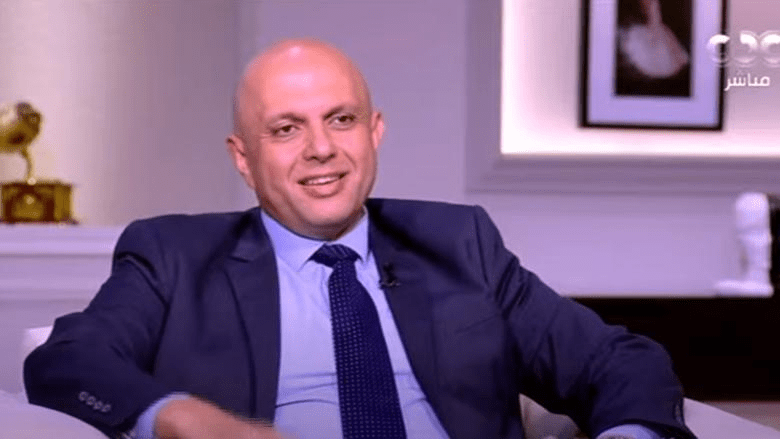
Dr. Emad Khalil, Professor of Marine Archaeology and Director of the Underwater Archaeology and Cultural Heritage Center at the Faculty of Arts, Alexandria University, stated that he graduated from the Faculty of Commerce and initially worked in banks. However, he shifted his life toward studying archaeology in the 1990s after an archaeological discovery, when he and a group of colleagues found artifacts underwater.
He added in an interview with journalist Quswa Al-Khallali, host of the program “In the Evening with Quswa” on the CBC channel: “The difficulty of my work in this field was that no one else was working in it, so I had no one to teach me. I had to travel abroad, but I loved the field and devoted great effort to it.”
The Beginning of the Scientific Journey
He continued that he traveled to the United Kingdom in 2001 and returned four years later, aiming to establish an academic center at Alexandria University to teach this specialty. He noted that he received a government scholarship: “It was not easy at all. I also received a European Union grant to establish this center, and Alexandria University fully supported me. We began operations in 2009, enrolling between 10 and 15 students each year, 90% of whom are women.”
A Graduate Center Accepting Students from Any Background
He pointed out that the center is exclusively for postgraduate studies and accepts students from any academic background. Similar centers around the world follow the same approach, with studies tailored to each specialization. For example, a law graduate studies laws related to the protection of antiquities, while an engineering graduate studies the technical and technological aspects of archaeological research.
The Real Start of His Career
He noted that his first major work preceded the establishment of the center, beginning with the restoration of the remains of the ancient Lighthouse of Alexandria in 1994—Egypt’s first significant project in this field, which continues to this day.
He continued: “After returning from my mission abroad, I started working at two sites in Egypt: one in the Red Sea on an 18th-century sunken ship, and another on the northwest coast near Marsa Matrouh with ships and ports. I have been working at these sites since 2015.”
Egypt’s Coasts Are Full of Sunken Antiquities
The professor emphasized that discoveries in Alexandria attracted attention from across the country: “Many people think that only Alexandria has submerged coasts, but this is not true. Egypt’s entire coastline has archaeological sites underwater from different eras.”
He also mentioned that Egypt has submerged sites dating back to the era of Pharaoh Khufu in the Red Sea. Since Alexandria received all the attention, he prefers working at sites outside the governorate along the 3,000 km coastline: “Egypt taught the world shipbuilding, and there is no evidence that any other country preceded it”.